Workshop Summary
AI has shifted from passive assistant to active agent: systems such as AlphaFold and GNoME accelerate human-led discovery, while platforms like Coscientist, CuspAI, AlphaProof, A-Lab, FutureHouse’s Kosmos, Sakana’s AI Scientist, and Lila Sciences’ “AI Science Factories” autonomously plan experiments, drive robots, and even draft papers. These systems already operate across the tool → co-author → founder spectrum, but the field lacks shared definitions, benchmarks, and governance to distinguish marketing from true milestones. Our ICML 2026 workshop convenes ML researchers, domain scientists, experimentalists, policymakers, and industry practitioners to:
- Establish a shared vocabulary for AI Scientist autonomy levels across disciplines.
- Propose evaluation criteria that determine when AI contributions are tools, co-authorship, or independent discovery.
- Draft principles for attribution, accountability, and governance that institutions can adopt.
- Build durable connections between AI and domain science communities to accelerate responsible progress.
About
Foundation models and autonomous agents are beginning to draft papers, direct experiments, and negotiate with collaborators. Yet the community is still debating whether these systems are merely powerful tools, trusted co-authors, or independent founders of new scientific disciplines. The ICML 2026 workshop AI Scientists – Tools, Co-authors, or Founders? convenes researchers from machine learning, natural sciences, and human-computer interaction to examine how close we are to autonomous scientific teams and what checks must be in place before we rely on them. We emphasize rigorous case studies, best practices from lab deployments, and frameworks for attributing scientific credit in hybrid human–AI teams.
Our discussions and submissions center on three themes:
- Autonomous discovery loops
- Build and evaluate agents that plan experiments, control instruments, and decide when to consult human oversight or simulations.
- Human–AI co-authorship
- Explore workflows for documenting AI contributions, sharing authorship, and maintaining reproducibility as assistants move from ideation to execution.
- Governance and verification
- Propose benchmarks, datasets, and socio-technical safeguards that keep scientific exploration transparent, auditable, and equitable.
New Dataset Proposal Competition
Datasets that capture the full scientific stack—from planning prompts to robotic execution traces—are urgently needed. We invite new dataset proposals that accelerate autonomous discovery and lower the barrier for researchers who do not have access to large labs. Check requirements on the Dataset Competition page, and see the separate AI Scientist Competition page for AI Scientist proposal details. Please update the ICML template footnote to “Submitted to/Accepted at/Published in the AI for Science workshop (ICML 2026).”
Journal Option – MSTL Focused Collection
We have partnered with Machine Learning: Science and Technology (MSTL) to organize a focused collection on AI for Scientific Discovery. Accepted workshop papers are encouraged to expand their work for submission to this collection. Visit the Journal Option page for submission guidelines and the collection link.
Follow Us
Please follow us on X and LinkedIn for the latest news, or join us on the Slack for active discussions.
AI4Science @ ICML Afterparty
To continue the conversations beyond the workshop, we are partnering with DESRES to host an Afterparty on Saturday, July 11, 2026 • 6:00 PM – 11:30 PM KST (venue TBA). This relaxed gathering is designed for deeper networking and collaboration discussions in an informal setting. Priority access will be given to workshop paper authors; a registration link will be released closer to the conference. Our NeurIPS 2025 edition drew more than 2,000 registrants and 325 invited attendees; we look forward to an equally vibrant gathering at ICML 2026.
Invited Talks (In alphabetical order)
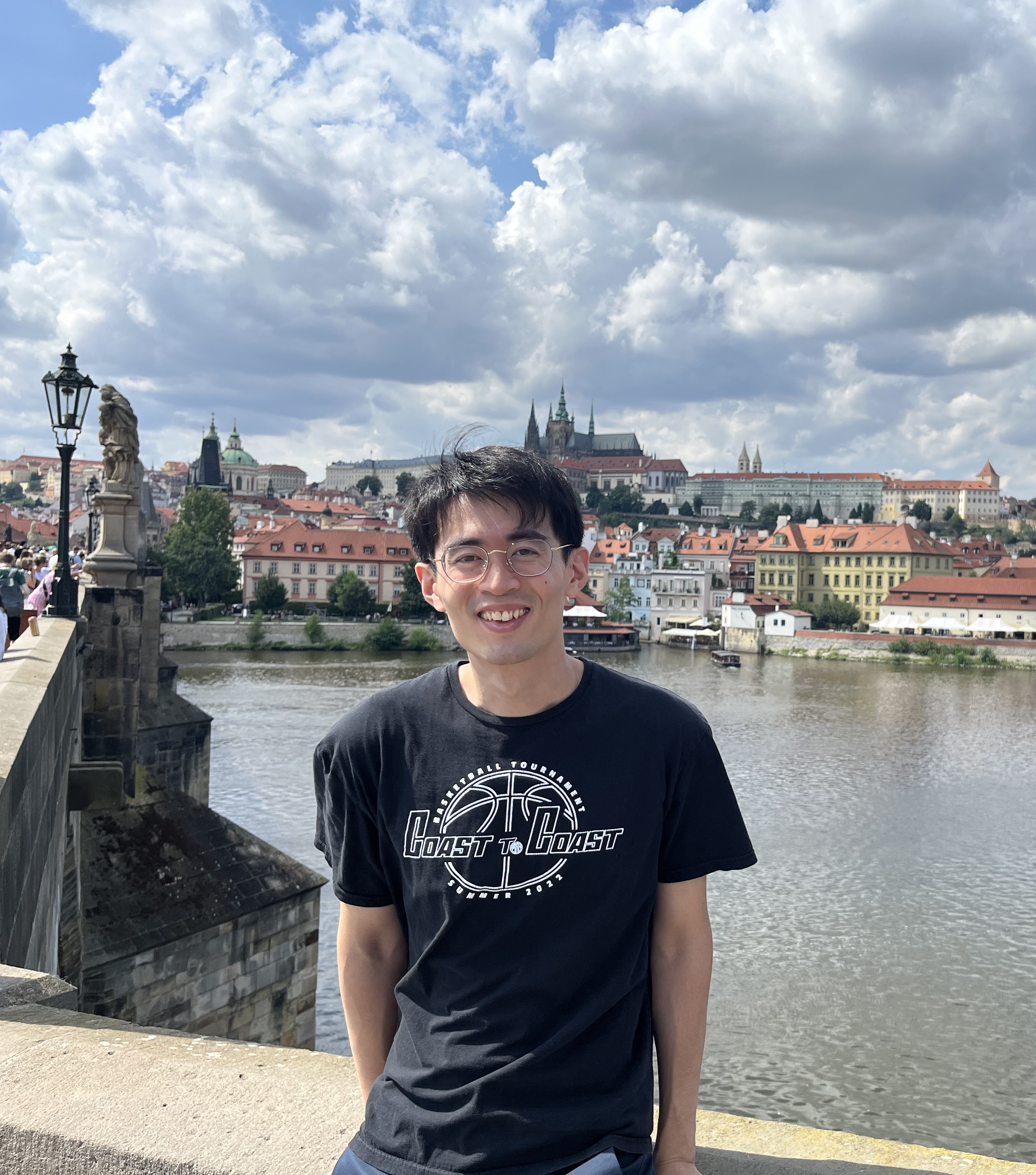
Our five confirmed speakers span the full spectrum of AI scientist research: Peter Clark (AI x General Science), Ray Jiang (AI x Mathematics), Wengong Jin (AI x Drug & Chemistry Discovery), Jonas Köhler (AI x Sampling, Comp. Chemistry), and Ramine Tinati (AI x Science).



Panel – Benchmarking “Breakthroughs” in AI Scientist: Definitions and Trustworthiness
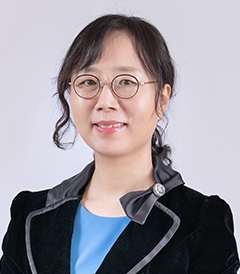
Our ICML 2026 panel, moderated by Prof. Mengdi Wang (Princeton), will probe how we define, measure, and trust “breakthroughs” claimed by AI scientists. Panelists Ben Miller (Meta FAIR), Chaok Seok (SNU), Moontae Lee (LG AI Research), Brian Cheung (UCSF/MIT), and Julian Schrittwieser (Anthropic) will debate definitions, novelty benchmarks, and trust thresholds for autonomous discovery systems.




Important Dates (Anywhere on Earth)
- Abstract Submission Deadline: May 5, 2026
- Submission Deadline (papers + competition proposals): May 7, 2026
- Notification Deadline: May 25, 2026
- Camera-ready / spotlight materials: June 30, 2026
- Workshop Date: Sat, Jul 11, 2026 • 8:00 AM – 5:00 PM KST, Hall C, virtual page https://icml.cc/virtual/2026/workshop/54099
Submissions
Please submit your paper on OpenReview. Our workshop is nonarchival; accepted papers will be showcased on this site and at ICML and remain eligible for future archival venues. Submissions fall under two tracks:
- Original Research Track: 4–8 page studies demonstrating AI-driven advances across physics, chemistry, biology, climate, materials, math, and beyond.
- Position Track: 4–8 page forward-looking or critical perspectives on AI scientists, governance, and sociotechnical implications.
All submissions use the ICML 2026 style (double blind) with unlimited references/appendices. Reviews are handled by 300+ reviewers and 50+ area chairs, ensuring at least 2–3 expert evaluations per paper. Best Paper Award is sponsored by Liner, and Best Poster Awards are sponsored by Trillion Labs. See the Call for Papers page for topic suggestions and detailed guidance.
Interested in our competitions? The Dataset Proposal Competition is supported by KAIROS Materials, and the AI Scientist Competition is sponsored by Samsung Advanced Institute of Technology (SAIT). Visit the competition page for requirements and timeline.
Call for Reviewers/Area Chairs
If you actively publish in AI for Science or deploy autonomous labs, we would love your help with reviews and meta-reviews. Please email ai4sciencecommunity@gmail.com with your areas of expertise (and whether you can serve as an area chair) so we can match submissions appropriately. Formal sign-up forms will be posted here once ICML finalizes the reviewing timeline.
Frequent Q&A
-
Do I need a full paper for the abstract deadline?
No. Register your title/abstract on OpenReview by Apr 29, 2026 so we can secure reviewers. The full PDF is due at the paper deadline. -
Can I attend if my work is still in progress?
Absolutely. Registration happens through the ICML 2026 workshop portal; anyone with an ICML pass may join. -
How can I help organize or suggest new programming?
Email us at ai4sciencecommunity@gmail.com with a short note about the session or activity you would like to lead. We periodically bring new organizers onboard as needs arise. -
Can I dual-submit to this workshop and another ICML workshop?
No. Dual submission to multiple ICML workshops is not permitted. However, our workshop is nonarchival, so accepted papers remain eligible for future archival venues (including other conferences) after the workshop presentation.
Organizers and Contact
For any question, please contact ai4sciencecommunity@gmail.com.
Organizers