About
AI Scientists now operate at a scale that outpaces human capacity for manual review. Systems such as Sakana’s AI Scientist write entire workshop papers end-to-end. Lila Sciences runs autonomous ``AI Science Factories’’ that hypothesize, experiment, and iterate without human guidance. FutureHouse’s Kosmos and Robin generate thousands of candidate hypotheses in a single run, and Google’s Co-Scientist proposes testable experiments at a rate no laboratory can fully evaluate. Each of these systems emphasizes verified results, yet that standard ranges from near-perfect formal proof in mathematics to decade-long clinical trials in medicine, with no shared framework for judging sufficiency across domains. As outputs scale beyond what humans can manually inspect, the question of which results to trust becomes as hard as generating them. The bottleneck for AI for Science is no longer hypothesis generation, it is verification.
Our NeurIPS 2026 workshop, Verification in the Age of AI Scientists, asks how we should trust, judge, and act on AI-generated science when verifiers are imperfect, scarce, or absent. In most sciences the verifier itself is imperfect or prohibitively expensive, and as AI Scientists scale beyond what humans can manually inspect, the central problem becomes which AI outputs deserve our scarce verification budget, and on what evidence we should be willing to act. We organize our discussion around three challenges.
-
Verification in open-ended hypothesis generation When AI Scientists propose thousands of candidate hypotheses, only a small fraction can ever be tested, and not all plausible outputs are scientifically meaningful, novel, or worth pursuing. Subtle failure modes such as data leakage, benchmark gaming, and hallucinated citations can make an output look verified without being so, and human taste, intuition, and domain expertise remain essential filters that are not yet well understood as learnable verifiers. This workshop asks how to build verifiers that can separate genuinely novel scientific contributions from convincing artifacts.
-
Verification under imperfect simulators Scientific domains differ dramatically in the reliability of their verifiers. In mathematics, formal systems such as Lean provide near-perfect verification, but in biology, force fields fail outside their training distribution and structure prediction has well-documented blind spots , while climate models depend on partial observations and expert judgment. This workshop asks when surrogate verifiers can substitute for ground truth, and on what evidence AI Scientists should be willing to act when the two disagree.
-
Verification under real-world constraints (uncertainty & safety) In practice, verification is bounded by time, cost, experimental throughput, and safety. A single Phase III clinical trial costs hundreds of millions of dollars and takes a decade, and in extreme weather prediction, rare out-of-distribution events drive evacuation and infrastructure decisions before sufficient evidence can be gathered. This workshop asks how scarce verification resources should be allocated across competing AI-generated hypotheses when downstream decisions affect human lives.
Follow Us
Please follow us on X and LinkedIn for the latest news, or join us on the Slack for active discussions.
AI for Science Party
Detailed information to be posted.
Invited Talks


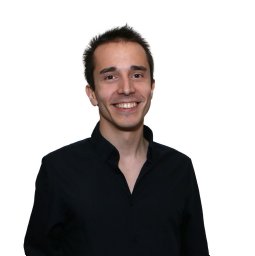
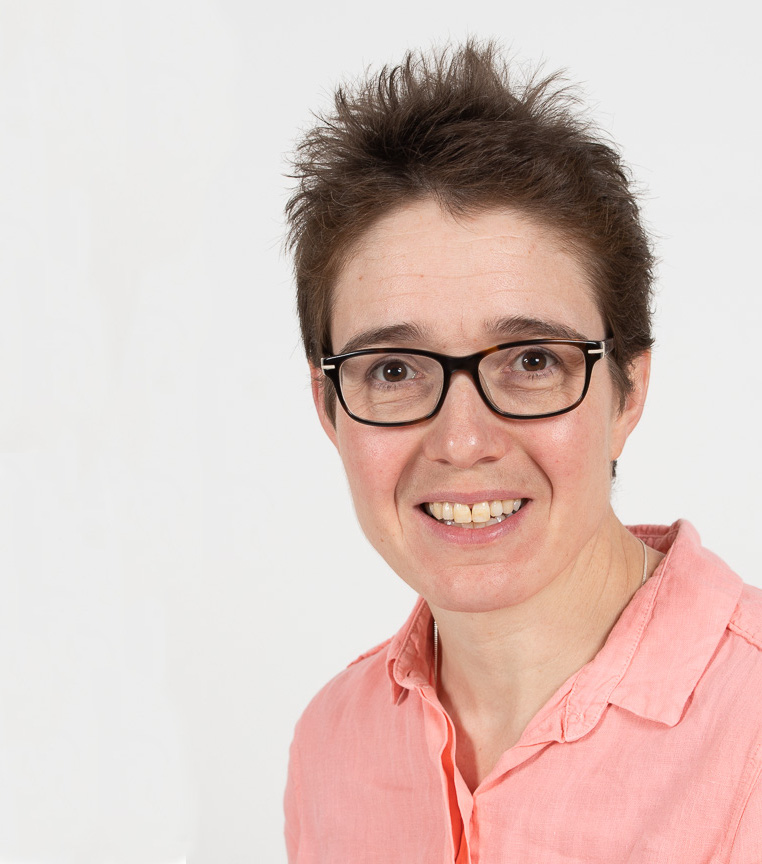
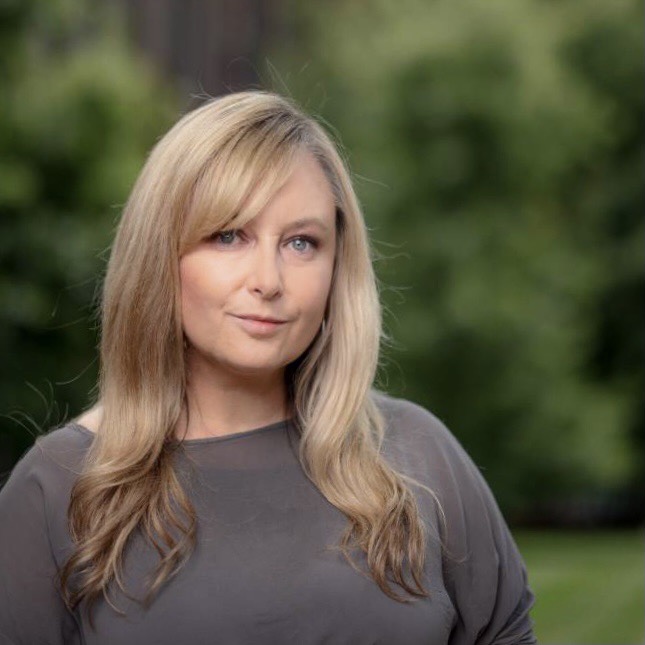
Panel: The Verification Gap: Abundant Hypotheses, Scarce Verifiers
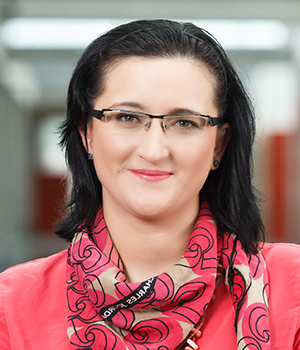


Tentative Dates (Anywhere on Earth)
- Submission deadline: August 29, 2026 AoE
- Reviewer reviews due: September 14, 2026 AoE
- Accept/reject notifications: September 29, 2026 AoE
- Workshop date: December 11 or 12, 2026
Submissions
Please submit your paper through OpenReview. Our workshop is nonarchival, and accepted papers will be posted on the workshop website. Please use the NeurIPS 2026 LaTeX template; the NeurIPS checklist is not required. Change the template footnote to “Submitted to/Accepted at/Published in the AI for Science workshop (NeurIPS 2026).” Submissions should be 4-8 pages, with unlimited references and appendices. See the Call for Papers page for full details.
Call for Reviewers/Area Chairs
We are calling for active researchers in the field to help with our review process. Here are the reviewer and area chair sign up forms.
Frequent Q&A
- What is the abstract deadline and why do we have it?
-
You only need to create a submission tab on OpenReview by the abstract deadline. (This is not a separate submission track for short papers). As we receive a large volume of diverse submissions, to entire good review quality and coverage of reviewer areas, we keep an abstract deadline for us to have a chance to invite new reviewers if needed.
- Can I attend the workshop even if I don’t have any submissions?
-
Yes, you are welcome to attend the workshop. Registration is through NeurIPS 2026 registration system with workshop selected.
- Can I join the organizing team?
- We always welcome new members to join our organizing team, feel free to reach out to us if you are interested. Several questions are recommended to be answered to help us make decision: what do you like about the workshop? what do you think we should improve? what can you contribute to the organizing team?
Organizers and Contact
For any question, please contact ai4scienceneurips2026@googlegroups.com.
Organizers